
Fasig-Tipton Kentucky October 2026 · Session 2
Hip 676Into Mischief – Brielle’s Appeal
Bay colt, foaled February 28, 2025, by Into Mischief out of Brielle’s Appeal, by English Channel. Property of Dixiana Farms LLC.
Prepared by Thoroughbred Intelligence
October 20, 2026 · Reference TI-FTOCT26-H676
The consignor’s sale video for this colt is available in the web version of this memo.
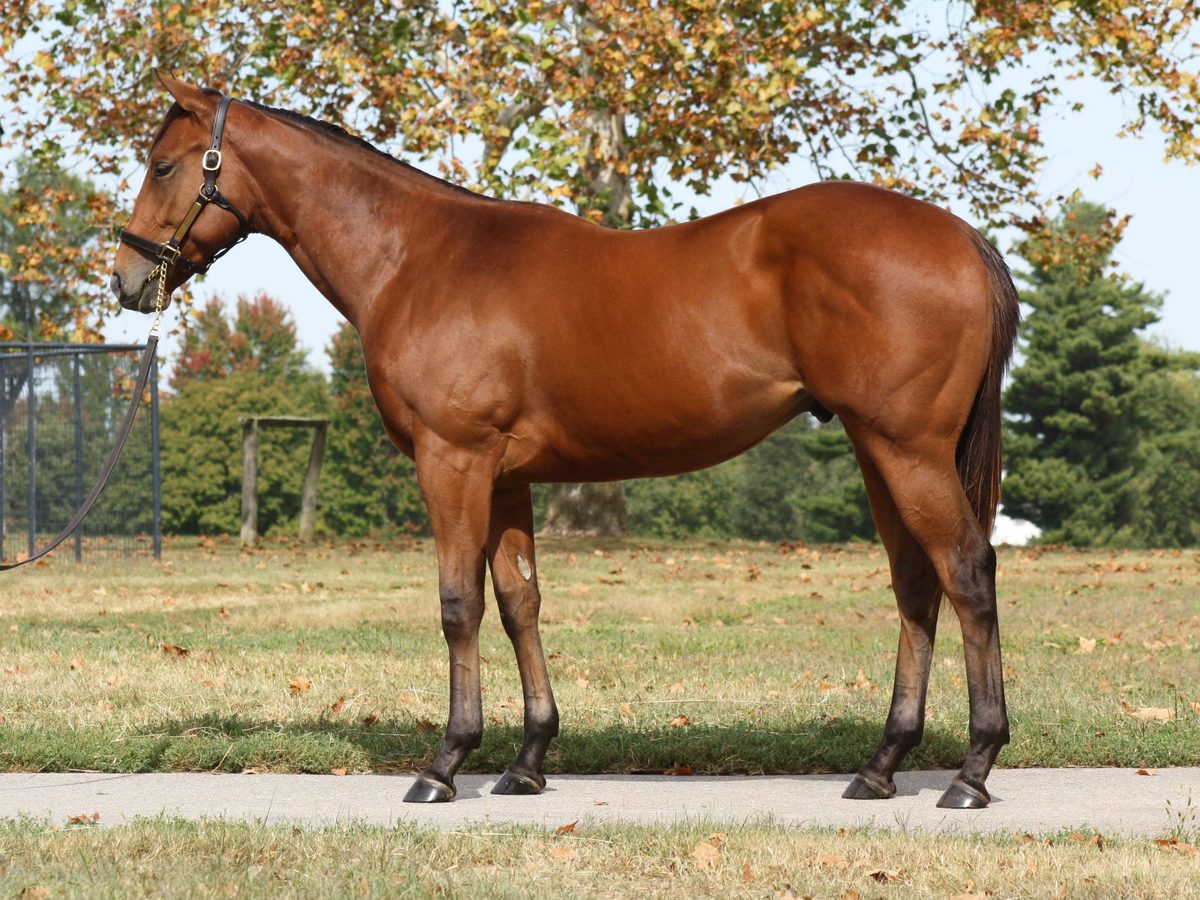
Lot Identification
- Hip
- 676
- Sale
- Fasig-Tipton Kentucky October Yearlings 2026, Session 2
- Barn
- 10
- Property of
- Dixiana Farms LLC
- Sex
- Colt
- Foaled
- February 28, 2025
- Sire
- Into Mischief
- 1st Dam
- Brielle’s Appeal
- Dam Sire
- English Channel
- 2nd Dam
- Court of Appeal, by Deputy Minister
- Maternal Family
- Authenticity, Charlatan, Hanalei Moon, Appealing Missy
- Dam Status
- Graded-stakes-placed winner
- Produce Status
- Three foals of racing age, all winners
- Eligibility
- Breeders’ Cup nominated; KTDF
- Result
- Sold for $800,000 to R T M Racing (Mahmud Mouni, agent for Tagermeen Racing)
Racing Profile Overview
Hip 676 combines Into Mischief’s established Grade 1 influence with a graded-stakes-placed mare whose three racing-age offspring are all winners. The immediate female family contributes performance on both dirt and turf, with Grade 2 winner Authenticity and her Grade 1-winning son Charlatan providing the strongest nearby examples of elite dirt class.
Maternal half-brother Brie’s in Town has added a fourth victory, increasing his earnings to $133,674. Together with Theismann and In Scope, he gives Brielle’s Appeal nine wins and combined offspring earnings of $523,728, achieved through three different stallions.
The mating receives Werk A+++ and TrueNicks A+, supported by graded-stakes success from the broader Into Mischief/Smart Strike-line combination. That statistical evidence complements the mare’s own ability and her successful production record.
The central racing interpretation is a progressive, mile-oriented colt with dual-surface potential and the strongest immediate-family evidence on turf. Six to 7½ furlongs represents a credible juvenile working range, with seven to nine furlongs the principal mature projection. The developmental case allows for juvenile opportunity while preserving scope for improvement at three and four.
Sire Influence | Racing Class and Distance Range
Into Mischief has produced Grade 1 winners including Authentic, Life Is Good, Laurel River, Pretty Mischievous, Gamine and Wonder Wheel. His contribution supplies established racing class across several divisions, while the maternal record provides the more specific evidence for this colt’s likely development.
The distance figures are informative. Into Mischief’s progeny have an average winning distance of 6.83 furlongs, compared with 7.41 furlongs for the broader Smart Strike-line mating pattern. The male subset of that cross averages 7.61 furlongs when winning.
These results support investigating the colt’s ability to carry speed beyond sprint distances. They also place the mating within a performance pattern that extends closer to a mile than the sire’s population average.
Sire assessment: Into Mischief supplies a proven source of racing class. The related mating results and immediate family performances give the strongest support to a colt capable of developing from sprint distances toward a mile.
First Dam | Racing Ability and Performance Measures
Brielle’s Appeal, by English Channel, won three races at three and four and earned $216,650. She finished second in the Richard R. Scherer Memorial Stakes and third in the Kentucky Downs Ladies Sprint [G3], establishing stakes-level turf speed immediately beneath the subject.
Her nine-start career included three turf victories and a 5½-furlong allowance success at Keeneland. She achieved a best Equibase Speed Figure of 112 and a Class Performance Index of 6.09. Her own performance is therefore an important sprint reference when considering the distance influence of English Channel.
Her Thoro-Graph progression adds a developmental measure. Her best figure improved from 11 at three to 3¼ at four, with the four-year-old performance ranked at the 97th percentile within its age-and-sex comparison group. Lower Thoro-Graph figures indicate stronger performances. The progression supports an interpretation of meaningful improvement with maturity.
First-dam assessment: Brielle’s Appeal contributes demonstrated turf sprint ability, graded placement and measurable improvement between three and four. Her successful production through Quality Road, Speightstown and Gun Runner adds evidence of racing ability across different matings.
Direct Sibling Evidence | Production and Development
Theismann, by Quality Road
Theismann has won four races and earned $310,695. His victories comprise three on turf and one on synthetic, including an 8½-furlong turf allowance at Keeneland. He achieved a best recorded Equibase Speed Figure of 106 and a Thoro-Graph figure of 4¾ at five or older. His record provides direct evidence of mature development, effective performance beyond a mile and adaptability across turf and synthetic surfaces.
Brie’s in Town, by Speightstown
Brie’s in Town has won four races from two through four, increasing his earnings to $133,674. His victories are divided equally between turf and synthetic surfaces. His ability to win at two and continue winning through four provides evidence of juvenile readiness and sustained competitive performance. His recorded performance figures include an Equibase Speed Figure of 95 and a Thoro-Graph figure of 8¼ at three.
In Scope, by Gun Runner
In Scope won in two starts at three and earned $79,359. Her victory came over a mile on dirt at Churchill Downs, providing a direct first-generation reference for the surface and distance central to this colt’s assessment.
Her early performance includes an Equibase figure of 89 and a Thoro-Graph figure of 4¾. The result gives the family another successful racing expression through a different sire.
Direct-produce assessment: Three winners from three racing-age foals establish successful production, with different developmental patterns represented. Brie’s in Town supplies juvenile success, In Scope contributes three-year-old dirt-mile ability, and Theismann demonstrates mature effectiveness beyond a mile. The sample is small, but each offspring contributes a distinct and relevant performance reference.
- 3 / 3Foals of racing age, all winners
- 9Wins between them
- $523,728Combined earnings
Female Family | Class and Proximity
Court of Appeal and Authenticity
The second dam, Court of Appeal, produced both Brielle’s Appeal and Authenticity. Authenticity is therefore the subject’s maternal aunt, placing her racing and production achievements close to the direct female line.
Authenticity won the La Troienne Stakes [G2] and Shuvee Handicap [G3] and earned $883,362. She finished second in the Personal Ensign, Ogden Phipps and Zenyatta, all Grade 1 events, and third in the Breeders’ Cup Distaff [G1]. Her repeated performances against leading dirt females establish more than a single high-class result.
Charlatan | Grade 1 Dirt Performance
Authenticity’s son Charlatan, by Speightstown, won the Arkansas Derby [G1] and Malibu Stakes [G1] and earned $4,047,200 worldwide. He is the son of Brielle’s Appeal’s half-sister and supplies the strongest nearby example of elite male dirt performance.
Authenticity also produced Hanalei Moon, winner of the restricted One Dreamer Stakes and a multiple stakes-placed earner of $296,840. The branch therefore contains successful stakes production through more than one stallion.
Appealing Missy | International Graded Class
The third dam, Appealing Missy, won stakes in France and two Grade 3 events in North America, finished second in the Santa Ana Handicap [G1], and earned $450,178. Her own career establishes international racing class and successful performance through five.
Her descendants include Statement, an eight-time winner and Grade 2-placed stakes winner; Rahys’ Appeal, winner of the Top Flight Handicap [G2]; and Yao Dash, a Grade 3 winner. These branches broaden the family’s record of transmitting stakes ability.
Family-class assessment: The first dam establishes graded placement and successful winner production. Authenticity and Charlatan supply the closest elite dirt references, while Appealing Missy and her other descendants add depth. The distinction between immediate offspring performance and collateral Grade 1 class is important when judging the strength and proximity of the evidence.
Racing Development | Precocity and Maturation
The immediate family supports a progressive developmental outlook.
Brie’s in Town won at two and continued winning through four. In Scope won at three. Theismann’s four victories came at five, while Brielle’s Appeal won at three and four and improved her best performance figure between those seasons.
This combination gives the pedigree a credible juvenile component alongside substantial evidence of later effectiveness. The strongest inference is flexibility in the timing of development, with racing ability capable of emerging and strengthening at different ages.
The February 28 foaling date provides calendar context. The timing of the colt’s racing introduction should follow his physical maturity, coordination, temperament and response to training.
Developmental assessment: Juvenile opportunity with a longer-term emphasis on progression through three and four. The family evidence supports allowing strength and racing experience to develop alongside early speed.
Distance Aptitude | Speed Carried Toward a Mile
Juvenile working range: six to 7½ furlongs.
Mature working range: seven to nine furlongs, centered around a mile.
The distance assessment draws on three complementary references: Brielle’s Appeal’s sprint speed, the mile and 8½-furlong performances of her offspring, and the broader mating pattern’s winning distances.
The male subset of the rated cross averages 7.61 furlongs when winning. English Channel’s record as a broodmare sire carries an average winning distance of 7.28 furlongs. These population measures support a mile-oriented assessment, while In Scope and Theismann provide the closer individual examples.
Seven furlongs and a mile are logical distances at which to evaluate the colt’s ability to settle, maintain position and sustain a finish. Nine furlongs represents a potential extension that would require confirmation through his own racing characteristics.
Distance assessment: The central proposition is a colt capable of carrying speed through a mile. His pedigree provides scope for further distance, with the eventual optimum dependent on efficiency of action, settling ability and finishing strength.
Surface Aptitude | Dual-Surface Potential, Turf-Led Maternal Evidence
Turf supplies the strongest immediate-family evidence. Dirt remains a credible avenue through the sire, the broader mating pattern and the Authenticity branch.
All three of Brielle’s Appeal’s victories came on turf, including a 5½-furlong allowance at Keeneland. She also achieved graded stakes placement in the Kentucky Downs Ladies Sprint [G3]. Her own performance establishes turf speed and stakes-level competitiveness directly beneath the subject.
Her offspring reinforce that orientation. Theismann has won three times on turf and once on synthetic. Brie’s in Town has won twice on each of those surfaces. In Scope supplies the direct dirt reference through her maiden victory from two starts.
Across Brielle’s Appeal and her three winning offspring, the twelve victories comprise eight on turf, three on synthetic and one on dirt. This is a descriptive record of the immediate family’s successful racing, with turf accounting for the largest share. The synthetic victories add a separate indication of surface adaptability.
The turf pattern has appeared through offspring by both Quality Road and Speightstown. That repetition gives the mare’s own turf performance greater relevance when interpreting the mating. It supports a maternal turf influence while leaving the individual contribution of each sire and the colt’s eventual preference open to assessment.
Into Mischief also has established Grade 1 turf production. Gina Romantica’s consecutive First Lady Stakes [G1] victories over a mile provide a relevant example of his ability to produce high-class turf milers. Turf therefore represents an avenue for pursuing class as well as a surface supported by this mare’s immediate family.
The dirt case remains substantive. The broader Into Mischief/Smart Strike-line cross has produced eight dirt stakes winners and two turf stakes winners. Authenticity and Charlatan supply nearby examples of high-class dirt performance, and In Scope demonstrates a dirt-winning outcome directly from Brielle’s Appeal. The exact Into Mischief/English Channel combination has only one starter in the rated population, limiting how specifically the broader statistics can describe this mating.
These strands of evidence answer different questions. The broader cross establishes a record of dirt stakes production. The mare and her offspring establish where this immediate family has done most of its winning. Both belong in the assessment, with greater weight given to the direct family record when describing the colt’s surface possibilities.
Surface assessment: Dual-surface potential, with turf the strongest immediate-family signal and dirt supported by the sire, In Scope and the collateral Grade 1 branch. Synthetic racing has additional family support. Confidence remains moderate, and the colt’s action, training response and race performance should determine his eventual specialization.
Maternal Toughness | Repeat Winning and Mature Effectiveness
The family’s durability evidence is strongest in repeated winning and the ability to remain effective at mature ages.
Brie’s in Town has won from two through four. Theismann won four times at five and remained placed at six. Authenticity won at four and six, while Appealing Missy’s winning record extended through five.
The broader family adds Statement’s eight victories from three through six and Tiz Alluptome Now’s five wins from two through five. These records distribute the evidence of sustained racing effectiveness across several branches.
The quality and duration of performance should retain separate meanings. Charlatan contributes principally to the class assessment. The more extended records of Theismann, Brie’s in Town, Authenticity and Statement contribute to the assessment of competitive longevity.
The latest victory by Brie’s in Town adds another successful race to the immediate family’s record. Its principal significance is continued effectiveness, reinforcing the evidence that Brielle’s Appeal can produce repeat winners.
Durability assessment: Positive family-level evidence of mature performance and repeated winning. Competitive longevity supports a longer-term racing perspective, while individual soundness, recovery capacity and training tolerance require direct evaluation.
Mating Analysis | Nick Ratings and Statistical Evidence
The mating receives Werk A+++, with a Quality Rating of Q8, and TrueNicks A+ with a variant of 4.38. Both nick assessments draw on the broader Into Mischief/Smart Strike-line relationship.
That population contains 72 foals of racing age, 56 starters, 41 winners and 10 stakes winners. Winners account for 73% of starters, and stakes winners approximately 18%. Among males, 23 of 29 starters are winners and five are stakes winners, equivalent to approximately 17% stakes winners from starters.
- 56Starters on the rated cross
- 41Winners
- 10Stakes winners
- 1Starter on the exact cross
The comparison groups help identify the source of the favorable assessment. The sire with other mares has a 12% stakes-winner rate from starters, while the broodmare-sire line with other sires has a 6% rate. Winner conversion on the rated cross is 73%, matching the sire’s comparison population. The historical advantage is therefore concentrated in stakes production rather than a higher general rate of winning.
The class references include Grade 1 winners Renegade and Timberlake, Grade 2 winners Resilience and General Jim, and Grade 3 winners Clearly Unhinged, Plutarch and Bye Bye. Resilience, Clearly Unhinged and Bye Bye are out of Smart Strike mares; other leading performers represent different branches of his sire line.
The exact Into Mischief × English Channel cross has only one starter. The favorable ratings therefore provide stronger evidence for the broader sire-line pattern than for this precise broodmare-sire combination. Historical stakes-winner rates describe those populations and should not be read as an individual probability for Hip 676.
Mating assessment: Favorable broader-cross evidence, supported by multiple graded winners and above-comparison stakes production. The exact-cross sample remains limited, making the mare’s own performance and produce record important parts of the assessment.
Pedigree Structure | Racing Implications
The mating brings together Into Mischief’s Harlan’s Holiday line and English Channel’s Smart Strike influence, with Deputy Minister appearing through Court of Appeal. The female line continues through graded winner Appealing Missy.
The 10-generation pedigree inbreeding coefficient is 1.88%, with a coefficient of relatedness between sire and dam of 2.68%. These measurements describe recorded pedigree relationships. They are distinct from measures of an individual horse’s soundness or athletic ability.
The practical racing interpretation comes from the performances within the pedigree. Brielle’s Appeal expressed stakes-level turf speed. Theismann and Brie’s in Town have won on turf and synthetic surfaces, while In Scope provides a direct dirt-winning reference. The Authenticity branch contributes high-class dirt performance through a separate line descending from Court of Appeal.
Pedigree assessment: A mating with direct maternal evidence of turf ability and successful production, accompanied by credible dirt influences. The principal question is how the colt carries his speed through a mile and which surface allows him to express that ability most effectively.
Racing Application and Final Assessment
The pedigree supports a developmental approach that evaluates speed and the ability to sustain it as races lengthen, with both turf and dirt remaining active considerations from the outset. A juvenile introduction within the six-to-7½-furlong range is consistent with the working assessment, provided physical readiness and training response support it.
Turf merits planned evaluation because of the immediate family’s established performance on that surface. Dirt also warrants consideration when the colt’s movement and training indicate a suitable response. Synthetic racing provides an additional option supported by the winning records of his two older maternal half-brothers.
Progression toward a mile and potentially nine furlongs should follow the colt’s settling ability, efficiency of movement and sustained finishing effort. Surface selection should serve the individual horse’s demonstrated aptitude.
The first dam’s production record is the principal immediate strength. Three winners by three different stallions establish successful transmission of racing ability, while the siblings’ contrasting development gives the pedigree flexibility beyond a single age or racing pattern.
The broader mating statistics add support for stakes-class potential. Authenticity and Charlatan establish the nearby Grade 1 reference, while Brielle’s Appeal and her offspring provide the more direct evidence of performance and winner production.
Projection Summary
- Racing projection
- A mile-oriented colt with a seven-to-nine-furlong mature working range.
- Developmental outlook
- Credible juvenile opportunity, with the stronger family emphasis on progression and retained effectiveness through maturity.
- Surface profile
- Dual-surface potential, with turf carrying the strongest immediate-family evidence. Dirt remains credible through the sire, In Scope and the collateral Grade 1 branch; synthetic racing has additional sibling support.
- Durability assessment
- Favorable evidence of repeat winning and mature competitive performance within the immediate and extended female family.
- Class interpretation
- Graded and Grade 1 ability is demonstrated through the sire, the broader mating pattern and the Authenticity branch. The colt’s attainable racing level remains an individual athletic question.
The central proposition is a progressive, mile-oriented colt whose immediate family gives turf a prominent place in the racing assessment, alongside a credible dirt opportunity. The mare’s performance and the winning records of her offspring support evaluating surface aptitude early and allowing the colt’s own athletic response to guide specialization. His seven-to-nine-furlong mature working range remains appropriate, with development, rather than a predetermined surface preference, directing the racing plan.
Basis and Limitations
This memo is analytical opinion based on pedigree, family-performance and mating evidence available at the date of analysis. It is a pedigree-based racing projection and does not incorporate physical inspection, cardiovascular evaluation, radiographic or endoscopic review. It is not a guarantee of racing outcome.
This is a sample of the racing analysis Thoroughbred Intelligence produces for clients, written on a yearling that sold publicly and published in full. Client memos are delivered privately and are not published. Request an introduction to discuss a catalog.