
Looking Beyond the Headline Stats
What five years of Book 1 RNAs tell us about Gun Runner, Into Mischief, Justify, Flightline and Not This Time.
Every September, the sire averages start flying even before the first session is over.
They are useful. They tell us where buyers are putting serious money and which stallions are producing yearlings capable of commanding it.
Those headline numbers also leave us wanting more.
An average tells us what buyers paid for the horses that sold. It says nothing about the horses that went back to the barn.
So we went back through five years of Keeneland September Book 1 results and looked at sire performance alongside RNA rates. The dataset covers 1,853 cataloged hips and 1,120 sales from 2022 through 2026.
The exercise gives us another way to think about commercial stallion strength.
A high average tells us how much buyers will pay for a sire's successful yearlings. Clearance gives us a sense of how far that demand extends through the Book 1 draft.
In 2026, those measures produced some very different sire profiles.
Start With Three Stallions
The 2026 Book 1 averages give us a good place to start.
| Sire | Average |
|---|---|
| Gun Runner | $1,104,000 |
| Into Mischief | $1,083,929 |
| Not This Time | $815,769 |
On average alone, Gun Runner and Into Mischief occupied essentially the same commercial territory, with Not This Time a level below.
Now add RNA rate.
| Sire | RNA rate |
|---|---|
| Gun Runner | 24% |
| Into Mischief | 36% |
| Not This Time | 13% |
Into Mischief showed more power at the very top. His Book 1 group included the $3.7 million colt out of Grazie Mille purchased by Coolmore's M.V. Magnier.
But eight of the 22 Into Mischiefs offered went home.
Not This Time's average was nearly $270,000 lower, yet buyers and sellers found common ground on 26 of the 30 horses that reached the ring.
Gun Runner combined both qualities. Thirty-three reached the ring, 25 sold, and 12 of those brought at least $1 million. His average reached $1.104 million and his median $900,000.
Average tells us how expensive the successful transactions were. Clearance begins to tell us how deep the market was willing to go.
Figure 1 · Two readings
Almost the same average, very different clearance
Show the data
| Sire | Book 1 average | Book 1 RNA rate |
|---|---|---|
| Gun Runner | $1,104,000 | 24% |
| Into Mischief | $1,083,929 | 36% |
| Not This Time | $815,769 | 13% |
Watching a Market Decide on Not This Time
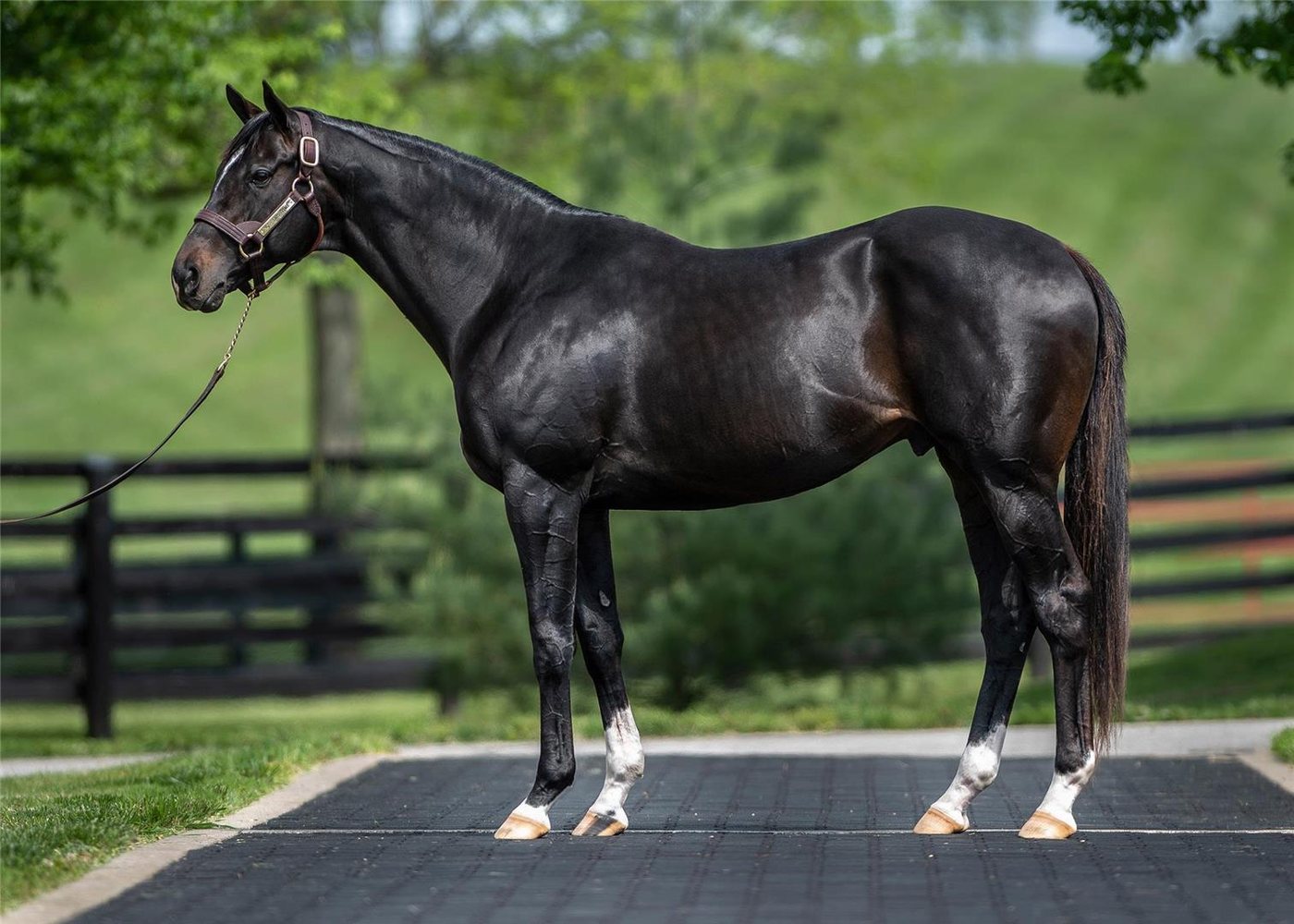
Not This Time may have the cleanest five-year progression in the dataset.
In 2022, Keeneland cataloged three of his yearlings in Book 1. One sold for $850,000.
His Book 1 gross then climbed from $4.2 million in 2023 to $10.5 million in 2024, $17.7 million in 2025 and $21.2 million this year.
| Year | Book 1 gross |
|---|---|
| 2022 | $0.85M |
| 2023 | $4.2M |
| 2024 | $10.5M |
| 2025 | $17.7M |
| 2026 | $21.2M |
The RNA progression may be even more revealing.
In 2023, his RNA rate was 40 percent.
Over the past two years, it has settled around 12 to 13 percent.
The progression looks a lot like a market gaining confidence.
By then, buyers had considerably more racetrack evidence on which to judge him. His Book 1 representation grew with that evidence.
This year, Not This Time had 34 yearlings cataloged. Thirty reached the ring and 26 sold.
His $815,769 average tells us he has become an expensive stallion to buy in Book 1. His 13 percent RNA rate shows how broadly that demand extended through his draft.
Justify Is a Different Puzzle
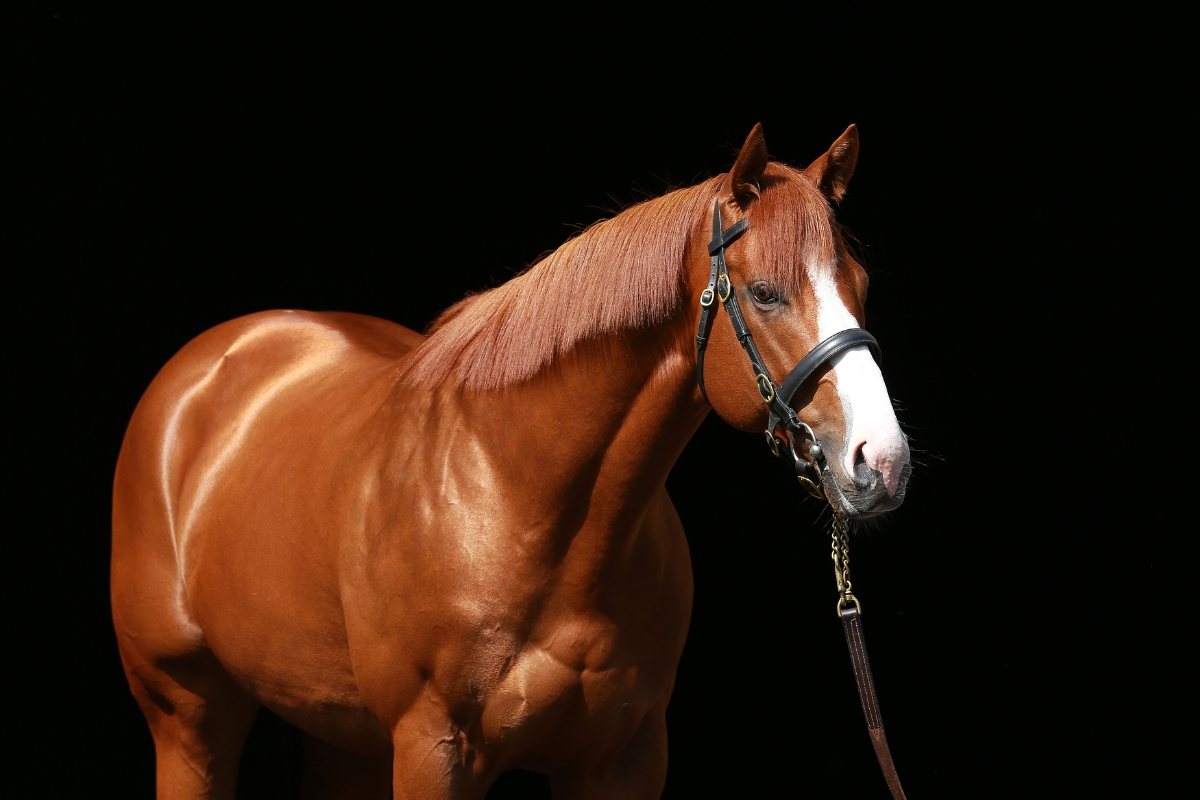
Justify's Book 1 representation has grown substantially, from 24 cataloged yearlings in 2022 to 37 in 2026.
This year, 28 reached the ring.
Sixteen sold.
Twelve went home.
That is a 43 percent RNA rate, the highest among the major sires in our analysis. His sold median was still a healthy $650,000.
The market clearly values the Justifys it wants. Explaining the 43 percent takes some interpretation.
Justify has become an extraordinary international sire. Much of his highest-profile success has come through turf horses and European racing, including City of Troy and other elite runners suited to a program very different from the American dirt-oriented path many Book 1 buyers are trying to build.
Perhaps that success cuts two ways in the American commercial market.
The traits making Justify exceptionally attractive to an international turf buyer may carry less weight for an American buyer shopping for dirt speed, Saratoga form and a future Classic horse.
If so, the female family and individual type may have an unusually large influence on how buyers categorize a Justify yearling. A horse that fits the American commercial target can still command serious money. Another may encounter a narrower group of bidders at a Book 1 reserve.
The 43 percent RNA rate gives us a reason to dig deeper into that question.
Flightline and the Year the Freshman Discount Disappeared
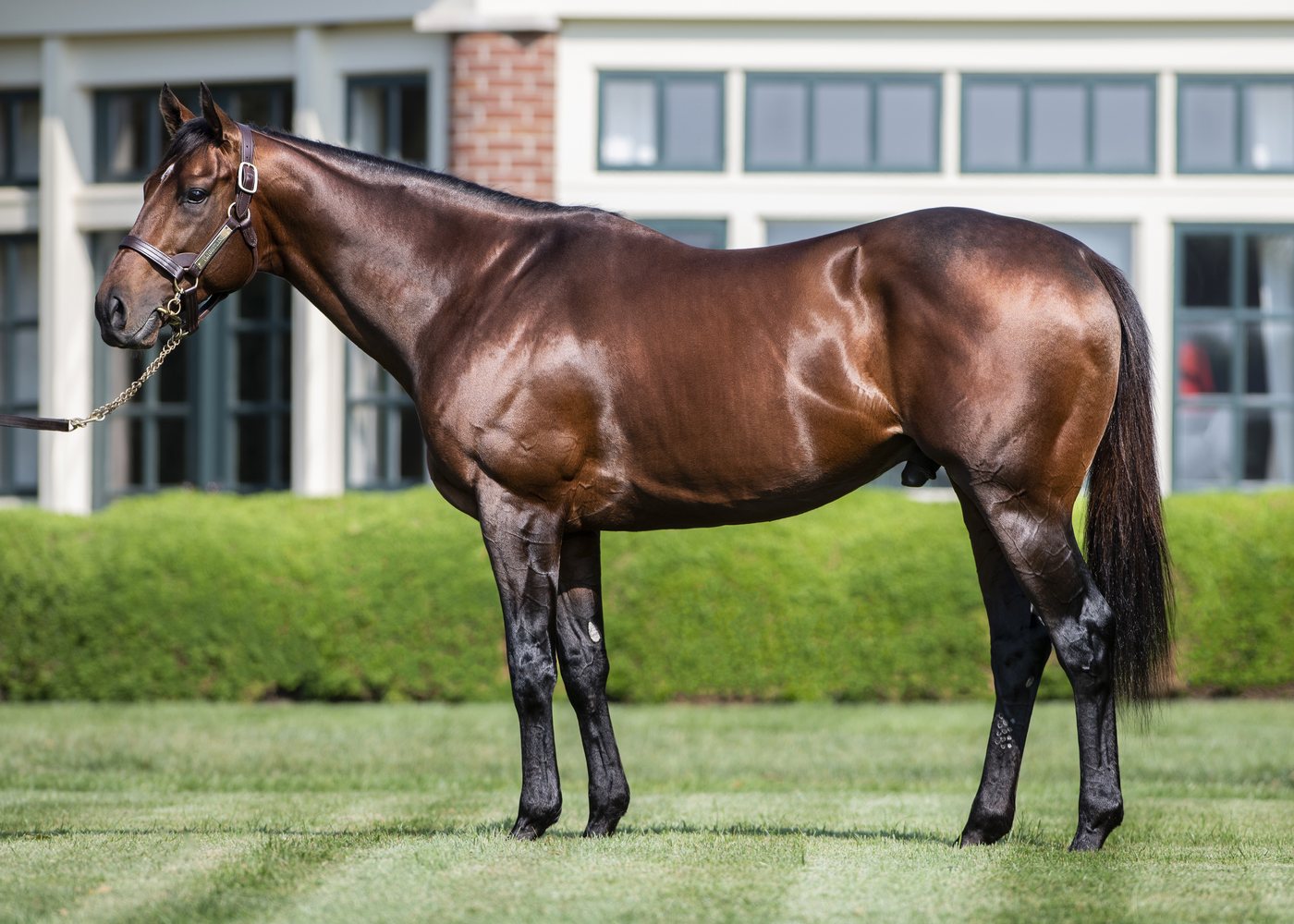
Flightline may be the most unusual case in the five-year sample.
In 2023 and 2024, first-crop yearlings sold at roughly a 35 to 40 percent discount to yearlings by proven stallions.
Then Flightline's first yearlings arrived.
His 2025 Book 1 crop averaged $879,545. Seven brought at least $1 million. His RNA rate was only 12 percent.
Across the entire freshman class, the usual discount almost vanished. First-crop yearlings averaged $639,792 against $671,450 for proven sires.
Book 1 buyers effectively gave Flightline the benefit normally reserved for a stallion who had already supplied racetrack evidence.
A year later, his second-crop average actually increased slightly to $886,471, while his RNA rate climbed from 12 percent to 29 percent.
| Year | Crop | Average | RNA rate |
|---|---|---|---|
| 2025 | First | $879,545 | 12% |
| 2026 | Second | $886,471 | 29% |
Buyers were still willing to pay elite prices for the Flightlines they wanted. That demand extended through less of the draft.
The timing offers one possible explanation.
In 2025, every Flightline buyer was taking an early position on a completely unresolved stallion. By his second crop, the first runners were beginning to turn speculation into evidence. Buyers could pay aggressively for the individuals they loved while becoming more selective with the rest.
The sales data cannot establish that as the cause. They show a stable top-end price alongside a substantial change in clearance.
The broader freshman market makes Flightline's first year look even more unusual.
The 2026 freshman class included Cody's Wish, Elite Power, Forte, Taiba, Mage, Arcangelo and others. Their Book 1 yearlings averaged $425,455, compared with $763,656 for proven sires.
That is a 44 percent discount, the widest in our five-year dataset.
The group produced zero seven-figure Book 1 yearlings.
Flightline's first crop appears to have earned an exception to a pricing pattern that returned immediately afterward.
Into Mischief and the Price of Familiarity
Into Mischief presents another version of the same question.
His 2026 Book 1 average remained above $1.08 million, and his best horse brought $3.7 million.
His RNA rate reached 36 percent.
Buyers have years of experience evaluating Into Mischief yearlings. They have seen hundreds of them, raced them, bred to him and developed opinions about the physical types and female families they prefer.
The top of the sire market also offers more alternatives today. Gun Runner has arrived. Not This Time has risen rapidly. Flightline commands premium prices as his first runners begin to supply answers.
One possible interpretation is that familiarity has made buyers more selective.
They know what they want in an Into Mischief, and they are willing to pay heavily when they find it.
A $1.08 million average and 36 percent RNA rate can comfortably exist together in that kind of market.
The Horses That Went Back to the Barn
RNA rate hardly belongs on a pedestal by itself.
A reserve reflects the seller as well as the horse. Book placement matters. Individual quality matters. Sample size matters. A 40 percent RNA rate can say something about seller expectations, buyer demand, the composition of the sire's draft, or some combination of all three.
That is exactly why it becomes useful alongside average, median, gross and representation.
Gun Runner had height and breadth in 2026.
Not This Time's clearance showed unusually broad demand through his Book 1 draft.
Into Mischief retained tremendous upper-end power while buyers drew a harder line through the rest.
Justify's results raise an interesting question about how an American dirt market prices a globally elite sire whose greatest successes increasingly point toward turf.
Flightline showed how far buyers were willing to stretch the normal first-crop pricing pattern for an extraordinary prospect, followed one crop later by a much more selective clearance profile.
A sire average compresses those stories into a single number.
The average tells us what buyers paid. The horses that went back to the barn tell us something too.
Thoroughbred Intelligence analyzed hip-level results from Keeneland September Book 1 for 2022 through 2026. Book 1 is defined as Sessions 1 and 2 in each year. The dataset covers 1,853 cataloged hips and 1,120 sales. The 2026 figures are through the close of Session 2 on September 16 and include 13 transactions marked pending settlement. RNA rates are calculated as RNAs divided by horses offered, excluding withdrawals.