
Why a Record September Felt So Tough for Pinhookers
Keeneland's yearling prices rose again. Pinhookers had paid considerably more for their horses, and more than half of the completed trades left $25,000 or less before expenses.
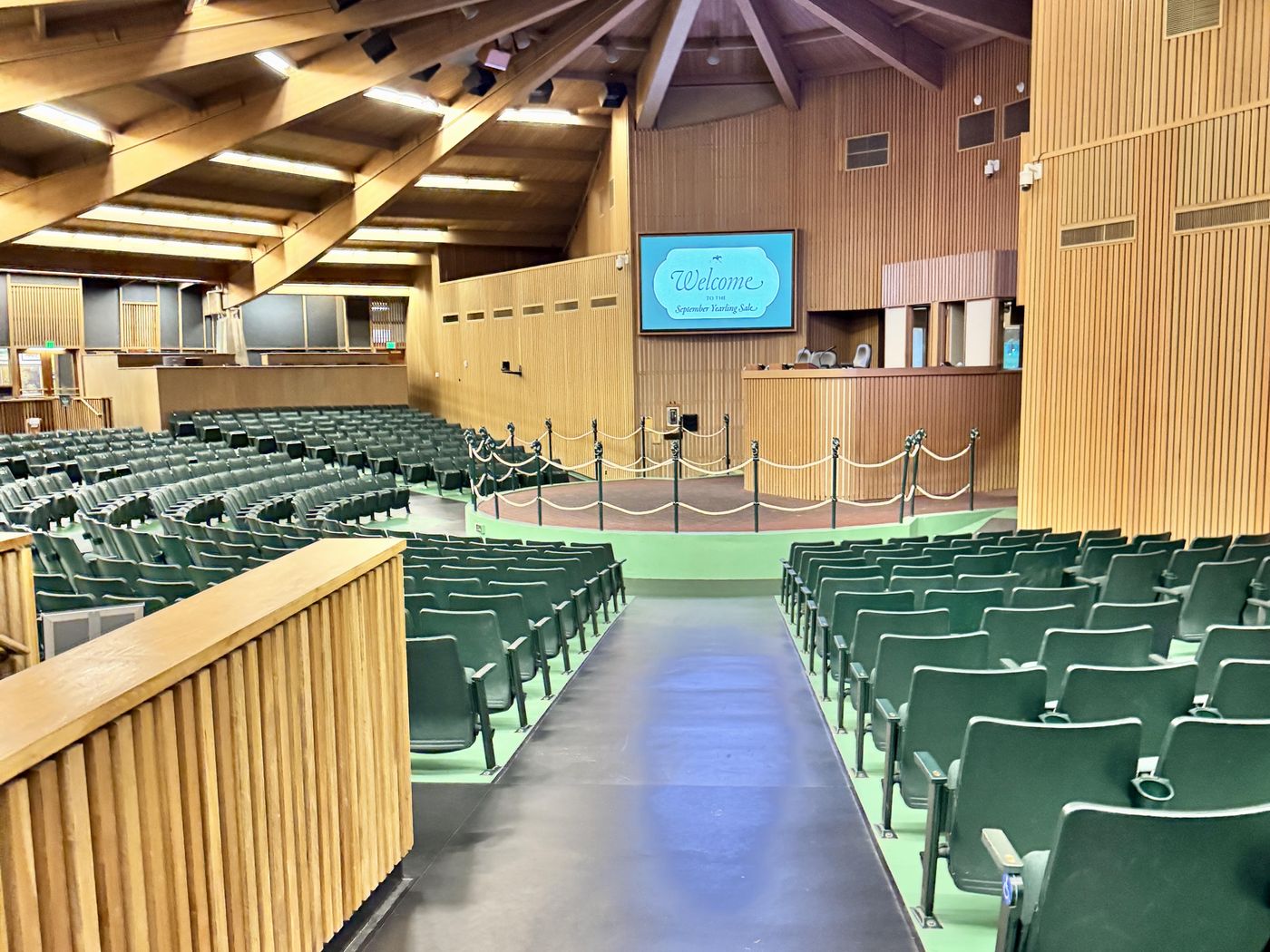
Keeneland September has come and gone. It's bittersweet.
You plan for it and look forward to it all year. Then it grinds you down for two weeks, and somehow, by the time it's over, you're already looking forward to next year.
I spent several days at the sale and kept hearing versions of the same conversation. The pinhook market was soft. Pinhookers were getting killed. It came up often enough that I wanted to put some numbers around it. Was that the experience across the sale, or were certain horses and parts of the market having a particularly difficult September?
I went home and built the Pinhook Tracker.
The idea was straightforward: match the September catalog back to completed public purchases as weanlings and short yearlings, requiring sire, dam, sex and date of birth to agree. Then attach the September result so we could see what each horse had cost, what it brought, and which ones were recorded as RNAs or withdrawals. That gives us a public auction history. Actual profit depends on ownership, expenses and the terms of each transaction.
I posted it on X. To my surprise, Horse X, formerly Horse Twitter, embraced it. In relative terms, it went viral.
That was pretty awesome.
Thank you to everyone who shared it, supported the experiment and sent notes of encouragement. This turned into a rewarding project, and the response was a big part of that.
The Pinhook Tracker now covers the entire catalog. It holds 706 horses, 15.2 percent of the 4,642 cataloged: 414 sold through the ring, 34 more sold afterward, 112 did not meet their reserve and 146 were withdrawn. The data remain provisional. I'll keep watching for Keeneland's updates and sweep them into the dataset over the next few weeks.
Putting the individual trades in one place was useful. I also like to crunch the numbers and look for the stories that become visible when you put those trades together.
So I went deep on this September. Here's what I found. Every figure below comes from those 706 horses unless I say otherwise.
Start With What They Cost
September was a strong yearling sale. Keeneland generated a record $536.7 million through the ring, with an $85,000 median. There was plenty of money being spent.
For pinhookers, the difficulty was how much they had already spent before arriving.
The median purchase price behind this year's pinhooks was $85,000, against $60,000 in last year's tracker. Among the horses that sold, the median gross resale multiple came back to 1.50x, down from 1.72x.
A 1.50x sale means the horse brought half again its purchase price. The months of board, veterinary work, insurance, preparation and commissions all have to come out of that difference.
| Measure | 2025 | 2026 |
|---|---|---|
| Pinhooks identified | 714 | 706 |
| Acquisition capital committed | $60.60M | $75.15M |
| Median purchase price | $60,000 | $85,000 |
| Median resale price, horses sold | $100,000 | $110,000 |
| Median gross resale multiple | 1.72x | 1.50x |
| Median gross gain, horses sold | $35,000 | $25,000 |
| Total gross appreciation | $36.39M | $29.83M |
| Resales below purchase price | 20.9% | 24.1% |
| Clearance, including post-sales | 82.4% | 80.0% |
Both years from the published trackers, 714 horses in 2025 and 706 in 2026. Clearance is completed sales divided by completed sales plus RNAs. Purchase and resale medians describe different populations; gains and multiples compare each sold horse with its own purchase price.
This year reversed the improvement we saw in 2025. Multiples had moved higher last September, then fell below it this year. Clearance stayed inside a narrow band. The share selling below purchase price worsened by a little over three points. The bigger change was how much appreciation the typical completed trade produced relative to its purchase price.
A longer comparison, built on transaction chains rather than the trackers so that all three years follow identical rules, puts that squeeze in perspective. On that basis the median multiple ran 1.61x in 2024, 1.71x in 2025 and 1.50x this year, and the median purchase price went $50,000, $60,000, $85,000. This year's multiple is the lowest since 2020. The $85,000 median purchase price is the highest in our 2019 to 2026 series. The strongest median multiple came in 2021, at 2.04x, when the median purchase had cost $43,000. That was a very different starting point.
Pinhookers had $75.15 million in purchase prices attached to this year's group, 24 percent more than last year despite having eight fewer horses. The horses that sold generated $29.83 million above their purchase prices, down 18 percent.
Just over half of the completed trades, 228 of 448, left $25,000 or less in gross gain, including those that sold at a loss. Last year, that share was 44 percent. I would need each operation's expenses to calculate net returns. The gross figures already help explain the conversations I was hearing at the sale.
Getting One Sold Was Only Part of It
The deals completed after the horse left the ring tell us quite a bit.
Thirty-four pinhooks subsequently sold. Their median gross multiple was exactly 1.00x. Sixteen brought less than their purchase price, and the group collectively lost $31,500 before expenses.
Last year's post-sales produced $532,000 in gross gain and a 1.21x median multiple across 38 horses, with only seven below cost. This year, those later transactions moved horses and returned cash at a small aggregate loss on the purchase prices alone. Carrying and selling expenses added to that loss.
Accepting a price like that can still be a sensible business decision. Getting money back out of a horse matters, particularly when the trade has become difficult and the next round of purchases is approaching.
There were also 112 RNAs and 146 withdrawals. Together, they carried $30.52 million in purchase costs, or 40.6 percent of the money originally committed, compared with 33.8 percent last year. Those figures describe money attached to horses recorded as RNAs or withdrawals. Their eventual economic result depends on each horse's value and subsequent disposition.
Book 3 Had Plenty to Like
Some pinhookers had a tremendous September. Book 3 produced more total gross gain than any other book.
Its 98 completed pinhooks generated $10.13 million above their purchase prices, roughly 34 percent of the total. The median gross gain was $62,500. Those results left considerably more room for expenses than the later books.
| Book | Cataloged | Completed sales | Clearance | Median gross multiple | Median gross gain | Total gross gain |
|---|---|---|---|---|---|---|
| 1 | 29 | 12 | 48.0% | 1.88x | $227,500 | $4.01M |
| 2 | 110 | 70 | 76.9% | 1.44x | $75,000 | $8.87M |
| 3 | 156 | 98 | 76.0% | 1.59x | $62,500 | $10.13M |
| 4 | 156 | 109 | 82.6% | 1.33x | $25,000 | $3.67M |
| 5A | 126 | 91 | 85.0% | 1.50x | $11,000 | $2.16M |
| 5B | 129 | 68 | 89.5% | 2.00x | $10,000 | $1.00M |
All 706 tracker pinhooks, including post-sales. Clearance uses completed sales plus RNAs as its denominator, so withdrawals sit in the cataloged column and not in clearance. Book labels follow the tracker's 5A and 5B convention.
The largest individual dollar gain came from Hip 1412, the Life Is Good colt out of Graceful Fancy. He had cost $285,000 at Keeneland November and brought $1.25 million through Gainesway in Book 3. That was $965,000 in gross appreciation.
Hip 1167, the Honor A. P. colt out of Silent Wings, went from $60,000 in November to $750,000 through Woods Edge Farm. A $690,000 gross gain on a $60,000 purchase is an exceptional result, wherever the horse appears in the catalog.
Book 1 could be enormously rewarding too. Its sold horses had the highest median multiple and by far the largest median dollar gain, $227,500. Slightly under half the offered pinhooks sold, however. Those return figures describe 12 completed transactions out of 25 that went through the ring.
The back of the sale needs almost the opposite explanation. Book 5B's 2.00x median multiple looks good. Its $10,000 median gross gain looks much less generous once expenses enter the conversation.
That 89.5 percent clearance applies to the horses that were offered. The original group also contained 53 withdrawals. Of the 129 pinhooks cataloged there, 68 completed a sale. Following the entire group gives us a fuller picture of the risk involved.
Book 4 Was a Better Sale and a Difficult Trade
Book 4 is where the two versions of September come together most clearly.
I wrote about it because the wider yearling market improved on both price and clearance. The middle of the sold population strengthened. Buyers were completing more transactions and paying more for the horses.
The pinhook results were considerably harder.
Book 4 had the lowest median gross multiple of any book, at 1.33x. Approximately 34 percent of its completed pinhooks sold below purchase price, the worst rate in the sale.
Then I narrowed the group to horses bought for at least $100,000.
Thirty sold. Seventeen brought less than they had cost. The median multiple was 0.91x, and those 30 trades collectively lost $189,500 before expenses.
More than half the six-figure purchases that sold in Book 4 brought less than their purchase price, in a book where the broader yearling market was improving.
That gets much closer to what happened. The yearling market offered stronger prices, and a substantial group of pinhookers still took losses. What they had paid months earlier made all the difference.
The Filly Result Surprised Me
The decline in multiples makes sense once you look at purchase prices. The colt-filly reversal is more surprising.
Colts had been easier to sell in each of the previous two Septembers. This year, pinhook fillies cleared at 85.2 percent against 75.9 percent for colts.
| Measure | Colts 2025 | Fillies 2025 | Colts 2026 | Fillies 2026 |
|---|---|---|---|---|
| Clearance | 85.2% | 78.8% | 75.9% | 85.2% |
| Median purchase price | $60,000 | $60,000 | $95,000 | $70,000 |
| Median gross gain | $42,500 | $29,000 | $30,000 | $19,750 |
Both years from the published trackers. The transaction-chain series shows the same colt advantage in 2024, at 84.0 percent against 75.9 percent for fillies.
I checked the wider sale to see how much of this came from the overall colt market. Across the full catalog, colt and filly clearance was almost identical, at 82.2 and 82.5 percent. The pronounced gap appeared among the pinhooks.
The same pattern appeared within books. In Book 2, 31 of 32 offered pinhook fillies sold. Among the colts, it was 39 of 59.
The purchase prices give us a possible explanation. The median colt purchase rose from $60,000 to $95,000, an increase of 58 percent. The median filly purchase moved from $60,000 to $70,000, or 17 percent.
I suspect that difference contributed to the difficulty getting the colts sold. Establishing how much it mattered would require a closer look at the individual horses. Physical development, veterinary findings, family and reserve expectations all enter the calculation.
The colts still produced larger gains when they sold: a $30,000 median against $19,750 for fillies. Fillies offered the easier sale this September. Colts offered the larger gross gain per completed trade, alongside a much steeper increase in purchase cost.
Yaupon Kept Showing Up
Yaupon has been a recurring part of my September coverage, and the pinhook results give us another reason to pay attention.
His 22 completed pinhooks returned a 2.03x median multiple and generated $3.28 million in gross gain. Three sold below purchase price. That is a substantial group, with a good result through the middle as well as at the top.
Two Book 2 colts contributed heavily. Hip 797, out of Social Mandate, went from $250,000 to $950,000. Hip 693, out of Mellonbrook, went from $180,000 to $825,000. Together they supplied $1.345 million in gross gain. The 2.03x median across all 22 completed trades adds weight to the broader result.
Army Mule and Gunite belong in the same conversation on smaller numbers, at 2.06x across eight completed trades and 1.76x across 17. Arcangelo returned 1.86x on 14.
The smaller McKinzie and Drain the Clock groups had a different experience. Five of nine completed McKinzie pinhooks sold below purchase price, with a 0.94x median multiple. Six of eleven Drain the Clock pinhooks sold below purchase price, and that group collectively lost $60,000 before expenses.
These figures describe the particular horses people bought and brought back to September. For those pinhookers, the stock they selected produced very different experiences at the same sale.
Winter Purchases Worked Better Again
The short-yearling results are worth keeping in mind as well.
For the third consecutive September, winter purchases produced a higher median gross multiple than fall purchases. This year, it was 1.59x against 1.47x. About 18.4 percent of completed winter purchases sold below purchase price, compared with 26.6 percent of fall purchases. Clearance was essentially equal, at 80.5 and 79.8 percent.
Fasig-Tipton Kentucky Winter Mixed supplied a particularly solid group: 26 completed resales, a 1.63x median multiple and two below purchase price.
Those winter horses also spent about two fewer months between purchase and resale. A shorter hold can help with carrying costs, though measuring the benefit would require the actual expenses. Buyers were also looking at more developed horses closer to September. Timing, selection and the horses available are all mixed together in these results.
Three straight years of better gross multiples makes this a pattern worth following.
The 20 Largest Gross Gains
The individual trades deserve some space too.
The 20 horses below generated $11.08 million in gross gain, approximately 37 percent of the total across the 448 completed resales. Fifteen appeared in Books 2 and 3.
I ranked them by gross dollar gain: September sale price less the recorded public purchase price, before expenses. Seller means the September consignor. Buyer is the September purchaser or purchasing agent reported in the results.
| Hip | Sire / dam | Book | Purchase price | September price | Gross gain | Seller (consignor) | September buyer |
|---|---|---|---|---|---|---|---|
| 1412 | Life Is Good / Graceful Fancy | 3 | $285,000Keeneland November 2025 | $1,250,000 | $965,000 | Gainesway | St. Elias / West Point / Lane's End Racing / Belladonna |
| 218 | Early Voting / Fanny | 1 | $300,000Keeneland November 2025 | $1,250,000 | $950,000 | St George Sales | M.V. Magnier / White Birch Farm |
| 265 | Flightline / In a Dream | 1 | $285,000Keeneland November 2025 | $1,100,000 | $815,000 | Gainesway | Caitlin Dunne, agent for Asagi Stables |
| 797 | Yaupon / Social Mandate | 2 | $250,000Keeneland November 2025 | $950,000 | $700,000 | Paramount Sales | Spendthrift Farm LLC and Rabito Enterprises LLC |
| 1167 | Honor A. P. / Silent Wings | 3 | $60,000Keeneland November 2025 | $750,000 | $690,000 | Woods Edge Farm | CHC Inc. / Maverick Racing / Light Post Ventures |
| 39 | Nyquist / Sorrentina Lemon | 1 | $525,000Keeneland January 2026 | $1,200,000 | $675,000 | Gainesway | St. Elias / West Point / Lane's End Racing / Belladonna |
| 693 | Yaupon / Mellonbrook | 2 | $180,000Fasig-Tipton November 2025 | $825,000 | $645,000 | Hunter Valley Farm | Donato Lanni, agent for FRC / Starlight / Madaket |
| 450 | Maxfield / Superhelpful | 2 | $250,000Keeneland November 2025 | $850,000 | $600,000 | Hunter Valley Farm | Chad Summers, agent |
| 520 | Gunite / Australasia | 2 | $180,000Keeneland November 2025 | $725,000 | $545,000 | Lane's End | CHC Inc. / Maverick Racing / Light Post Ventures |
| 1719 | Gunite / Brand New Game | 3 | $170,000Keeneland November 2025 | $700,000 | $530,000 | Killora | Gold Square |
| 1872 | Maxfield / Jumby | 3 | $80,000Keeneland November 2025 | $600,000 | $520,000 | Paramount Sales | Kimmel / Sallusto, agent for Flanagan Racing |
| 1624 | Taiba / Sunriser | 3 | $110,000Keeneland November 2025 | $625,000 | $515,000 | Grovendale Sales | Donato Lanni, agent for FRC / Starlight / Madaket |
| 1344 | Life Is Good / Concert Hall | 3 | $275,000Keeneland November 2025 | $675,000 | $400,000 | Gainesway | Colt Pike, agent for Highlander |
| 1 | Quality Road / Racing | 1 | $320,000Fasig-Tipton November 2025 | $700,000 | $380,000 | Taylor Made Sales Agency | Donato Lanni, agent for FRC / Starlight / Madaket |
| 311 | Justify / Lucky for You | 1 | $225,000Fasig-Tipton November 2025 | $600,000 | $375,000 | Paramount Sales | Albaugh Family & Team Railbirds / B. Berkelhammer, agent |
| 467 | Yaupon / Tiz a Ghostzapper | 2 | $200,000Keeneland November 2025 | $575,000 | $375,000 | Woods Edge Farm | St. Elias / West Point / Lane's End Racing / Belladonna |
| 741 | Practical Joke / Pioneer Princess | 2 | $260,000Keeneland November 2025 | $625,000 | $365,000 | Woods Edge Farm | St. Elias / West Point / Lane's End Racing / Belladonna |
| 1000 | Elite Power / Havin' a Party | 2 | $150,000Keeneland November 2025 | $500,000 | $350,000 | Heartwood Farm | St. Elias / West Point / Lane's End Racing / Belladonna |
| 1489 | Flightline / Mendi's Girl | 3 | $250,000Keeneland November 2025 | $600,000 | $350,000 | Taylor Made Sales Agency | Charlie Allen, agent for Terry Stephens Racing |
| 553 | Flightline / Chart | 2 | $290,000Keeneland January 2026 | $625,000 | $335,000 | Bedouin Bloodstock | David Lanigan / Ted Durcan, agent / Heider Family Stable |
Source: matched public purchase and September resale records. Consignors are shown by firm, and buyer punctuation is standardized for readability. Every purchase price and September price in this table was checked against the published sale results.
What I Take From It
I started this project because I wanted to understand the conversations I was hearing at Keeneland. The data give those conversations some weight.
A record yearling sale still left many pinhookers with small gross gains, expensive RNAs and withdrawals, or completed sales below the purchase price. The year-over-year decline in gross multiples was real. So were the excellent trades in Book 3, Yaupon's results and the opportunities among less expensive purchases.
The experience depended heavily on the horse and what someone had paid for it.
The top 45 trades, roughly one in ten completed resales, accounted for 58 percent of total gross gain, against 51 percent in last year's tracker. A few exceptional horses carried a substantial part of the result, and this year their contribution was larger.
Two horses bring it back to something more tangible.
Hip 3031, the Mandaloun filly out of Comedia, was bought by Believe Bloodstock for $4,000 at Keeneland January. She brought $100,000 through Machmer Hall Sales in Book 5A. That was 25 times her purchase price, the largest multiple in the tracker, and $96,000 in gross gain.
Hip 1121, the Maclean's Music colt out of Pledgulations, also brought $100,000, in Book 2. He had cost $270,000, producing the largest individual dollar loss in the tracker.
Both brought the same September price. One had cost $4,000; the other, $270,000.
A note on the numbers. Every 2026 figure in this article comes from the Pinhook Tracker: 706 horses matched on sire, dam, sex and date of birth to a completed public purchase at one of six weanling or short-yearling sales. The 2025 comparisons come from last year's tracker, which holds 714. Results are as reported through September 26 and remain subject to later post-sales. Reported post-sales count as completed resales. Clearance is completed sales divided by completed sales plus RNAs, so withdrawals sit outside it. Gross gains and multiples compare each sold horse with its recorded purchase price, before commissions, board, veterinary expense, insurance, sales preparation and financing. The cost basis sitting in unsold horses is not a realized loss, because those horses retain value. Verifying continuous beneficial ownership would require additional ownership records.
The one exception. The three-year figures quoted in the second section, and the 2024 filly comparison, come from a separate transaction-chain series that applies identical matching rules to 2024, 2025 and 2026 and produces 602, 710 and 694 horses. It exists because the trackers only go back to 2025 and because that series carries no horse forward through an intervening auction. Its 2026 median multiple, 1.50x, is identical to the tracker's.