
What Happened to the 2023 Stallion Class Once the Horses Started Running
Keeneland September gave the 2023 Kentucky stallion class its first yearling sale with racetrack evidence attached. Most went backward. Four did not.
One of the strange things about the stallion business is how many decisions get made before there is much evidence.
A stallion enters stud based on his own race record, pedigree, physical and whatever confidence breeders have in him. His second book is assembled when the first foals are still babies. His first yearlings sell before one of his offspring has ever started a race. By the time the market gets anything resembling real evidence, a lot of money has already changed hands.
For the stallions who entered stud in Kentucky in 2023, the calendar finally caught up this year. Their first yearlings sold at Keeneland September in 2025 with no racetrack evidence behind them. Their first two-year-olds began running in 2026, and nine months later their second yearlings came through the same Keeneland ring.
That gives us a useful test: the same sires, at the same sale, one year apart, with an actual crop of runners appearing in between.
A quick terminology note, because this gets confusing. These are the 2026 first-crop sires on the racetrack, meaning their first foals are two-year-olds this year. At the 2026 yearling sales, "first-crop sire" generally refers to stallions who entered stud in 2024. I am talking here about the 2023 stallion class and their second-crop yearlings.
I screened the BloodHorse first-crop list for stallions with at least ten Keeneland September yearlings sold in both 2025 and 2026. Eighteen made the cut. Below that level, a single expensive horse can move a sire's median enough that the year-over-year comparison starts telling us more about one horse than the stallion.
The second crop got marked down
Keeneland September had another strong year. The overall median rose from $80,000 to $85,000, up 6.3%. Take these eighteen stallions out of the sale and everything else posted a $90,000 median, up 18.4%.
The eighteen went the other direction. Their pooled median fell from $80,000 to $65,000, and fourteen of the eighteen had a lower individual median than a year ago. The median change across the group was a decline of 36.1%. Their share of the entire sale's gross fell from 26.1% to 15.1%.
| Measure | 2025 | 2026 |
|---|---|---|
| Catalogued | 1,336 | 762 |
| Sold | 890 | 514 |
| Median | $80,000 | $65,000 |
| Average | $156,178 | $163,912 |
| Reported sale rate | 82.0% | 84.8% |
| Gross | $139.0M | $84.3M |
| Share of sale gross | 26.1% | 15.1% |
Source: Thoroughbred Intelligence normalized Keeneland September record. Median and average are of sold horses only. Reported sale rate is reported sold divided by horses offered, excluding withdrawals and including identifiable post-sale transactions. The underlying counts are 890 sold against 195 RNAs in 2025 and 514 sold against 92 RNAs in 2026.
The rate improved while the median fell. Sellers were getting a slightly greater share of the horses they took to the ring sold, just at different prices. The average also increased slightly, which looks odd until you look at the top of the market. Eleven yearlings from the group sold for at least $1 million this year, compared with ten last year, despite 42% fewer completed sales.
The high end held. The pressure was much more obvious through the middle and lower parts of the group, where the share selling below $25,000 increased from 19.8% to 25.3%.
Before attributing any of that to what happened on the racetrack, I wanted to answer a more basic question: maybe second crops simply sell worse.
It turns out they usually do
There are plenty of reasons the second crop might lose value. The first crop gets the novelty. Breeders have another year to change their minds. Buyers and sellers have already seen the first weanlings and yearlings. The second crop is often smaller.
So I ran the same screen against the two stallion classes immediately ahead of this one.
| First yearlings | Second yearlings | Sires | Sale-wide median change | Median sire change |
|---|---|---|---|---|
| 2023 | 2024 | 14 | +4.5% | -46.4% |
| 2024 | 2025 | 8 | +14.3% | -35.4% |
| 2025 | 2026 | 18 | +6.3% | -36.1% |
Source: Thoroughbred Intelligence normalized Keeneland September record. Sale-wide median is the median of all sold yearlings. Median sire change is the median of each sire's year-over-year change in his own median.
Three classes, three rising Keeneland markets, three sizable declines in the second crop.
That changed the question for me. The decline itself appears to be a normal part of the stallion cycle. What I wanted to understand was which sires held their ground inside that decline, and which ones got hit hardest.
What the runners added
I compared a number of first-crop measures with what happened to each sire's yearling median. Of everything I tested, the share of a sire's runners that had earned black type had the strongest relationship with how his yearlings held up. It carried more information than the number of black-type winners alone.
One horse can win a stakes race and create a headline. When several horses from the crop are getting into stakes races and finishing in the money, we are starting to learn something broader about what the sire may be producing.
Another very simple measure mattered almost as much: did the horses get to the races? Sires whose first crops were producing runners tended to hold their yearling values better. Before we get to Grade 1 winners or even stakes horses, a breeder wants some confidence that the offspring train, stay in one piece and make starts.
The four stallions whose medians rose had black-type horses from 9.3% of their runners, compared with 4.7% for the fourteen that fell. Their winner rate was 29.3% against 22.1%, and 44.2% of their first-crop foals had already made it to the races compared with 35.1% for the group that declined. Their opening stud fees were almost identical.
Fee did not separate the two groups. What the crop was doing on the racetrack did.
The 2023 stallion class at Keeneland September
The individual results put the size of the repricing into perspective. Gross is worth keeping beside median because the amount of inventory changed dramatically for several of these sires.
| Sire | Sold 25 / 26 | Median 2025 | Median 2026 | Gross 2025 | Gross 2026 | Reported sale rate 25 → 26 | Median change |
|---|---|---|---|---|---|---|---|
| Early Voting | 41 / 17 | $100,000 | $125,000 | $6.24M | $3.23M | 80.4% → 89.5% | +25.0% |
| Golden Pal | 76 / 41 | $82,500 | $100,000 | $10.58M | $5.84M | 79.2% → 93.2% | +21.2% |
| Life Is Good | 60 / 70 | $260,000 | $300,000 | $18.23M | $24.39M | 83.3% → 94.6% | +15.4% |
| Greatest Honour | 29 / 12 | $15,000 | $17,000 | $0.58M | $0.22M | 87.9% → 92.3% | +13.3% |
| Corniche | 43 / 13 | $170,000 | $150,000 | $8.76M | $2.02M | 89.6% → 92.9% | -11.8% |
| Flightline | 44 / 52 | $550,000 | $467,500 | $30.55M | $30.90M | 86.3% → 81.2% | -15.0% |
| Nashville | 43 / 28 | $40,000 | $30,000 | $2.73M | $1.17M | 82.7% → 90.3% | -25.0% |
| Speaker's Corner | 35 / 17 | $55,000 | $40,000 | $2.52M | $0.81M | 89.7% → 73.9% | -27.3% |
| Highly Motivated | 21 / 14 | $35,000 | $22,500 | $1.00M | $0.52M | 70.0% → 100.0% | -35.7% |
| Mystic Guide | 26 / 10 | $41,000 | $26,000 | $2.03M | $0.27M | 92.9% → 83.3% | -36.6% |
| Mandaloun | 38 / 32 | $70,000 | $42,500 | $4.04M | $1.67M | 73.1% → 88.9% | -39.3% |
| Jackie's Warrior | 52 / 45 | $170,000 | $80,000 | $12.37M | $4.89M | 78.8% → 77.6% | -52.9% |
| Drain the Clock | 39 / 14 | $65,000 | $30,000 | $3.10M | $0.62M | 84.8% → 82.4% | -53.8% |
| Olympiad | 66 / 22 | $62,500 | $28,500 | $6.41M | $1.12M | 79.5% → 84.6% | -54.4% |
| Cyberknife | 61 / 30 | $65,000 | $26,500 | $6.06M | $1.04M | 80.3% → 81.1% | -59.2% |
| Epicenter | 93 / 47 | $75,000 | $30,000 | $12.71M | $3.53M | 83.0% → 75.8% | -60.0% |
| Jack Christopher | 89 / 36 | $80,000 | $30,000 | $9.76M | $1.82M | 81.7% → 78.3% | -62.5% |
| Mo Donegal | 34 / 14 | $20,000 | $6,500 | $1.35M | $0.20M | 82.9% → 87.5% | -67.5% |
Source: Thoroughbred Intelligence normalized Keeneland September record. Median and gross are of sold horses only. Reported sale rate includes identifiable post-sale transactions and excludes withdrawals.
Life Is Good sold more horses at a higher median and generated more gross. Flightline's median came down 15%, but he sold eight more yearlings and actually increased gross slightly. Early Voting, Golden Pal and Greatest Honour all had higher medians despite much less inventory, which is why the drop in their gross should not be read as weaker demand.
The four that went up
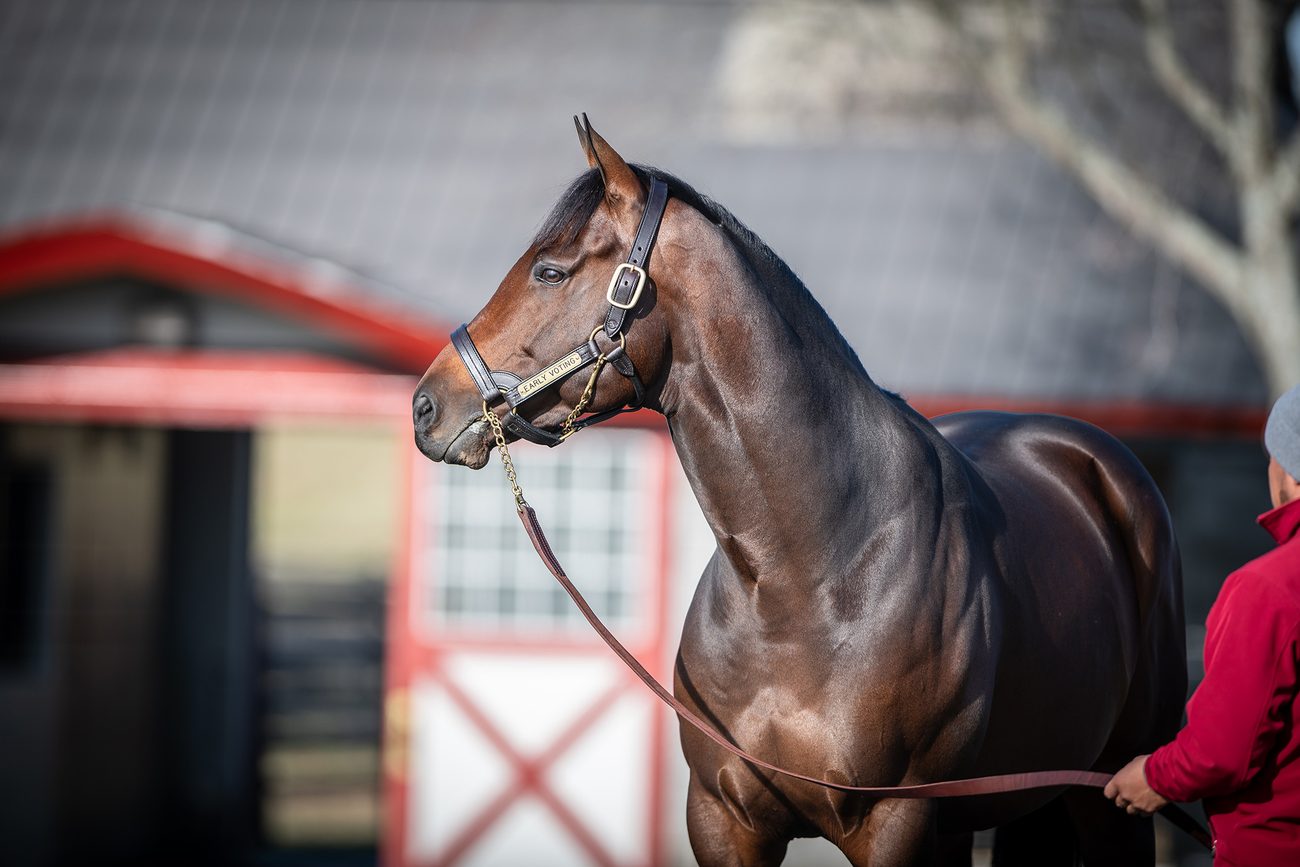
Early Voting had the best year-over-year result in the group. His median moved from $100,000 to $125,000, up 25%, while his reported sale rate improved to 89.5%. He has 36 runners from a first crop of 96, with 11 winners, two black-type winners and one of the class's two Grade 1 winners. His top Keeneland yearling brought $1.25 million.
Golden Pal rose 21.2%, from an $82,500 median to $100,000, while his reported sale rate jumped from 79.2% to 93.2%. He leads the BloodHorse first-crop list by progeny earnings and also leads by average earnings per runner, with six black-type horses from 71 runners. Almost all of that evidence is on turf, which makes his commercial result more interesting in a Kentucky market that generally values dirt performance heavily.
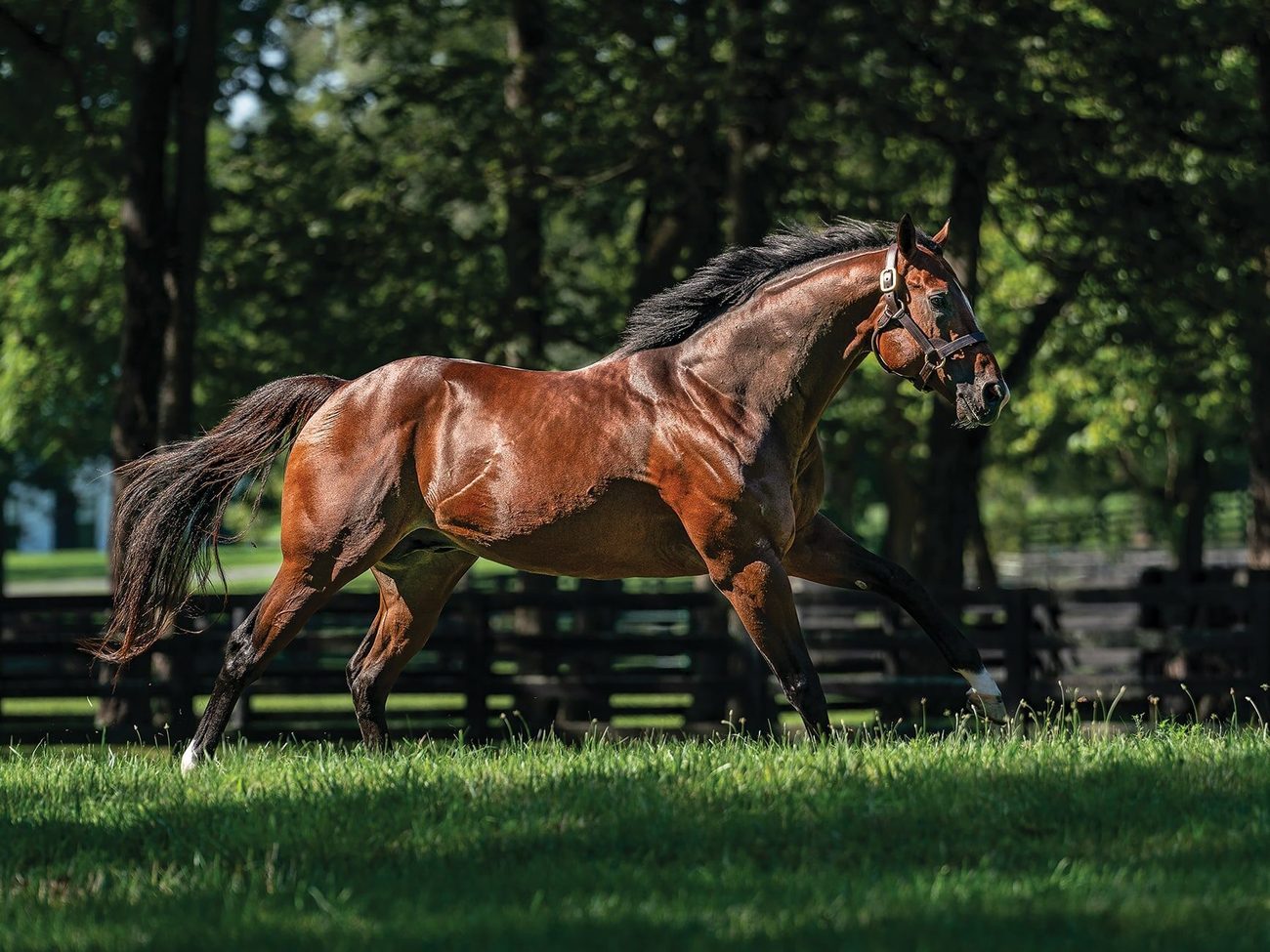
Golden Pal was the only stallion of the eighteen whose 2026 fee increased, from $20,000 to $25,000, and his Keeneland median rose along with it. Yet his representation in Book 1 went from eight yearlings last year to none this year, and he went from 33 horses in the first two books to seven. His racetrack results, the farm's pricing and the catalogue placement are giving different reads on the same horse.
Life Is Good probably had the cleanest commercial result in the class. His median increased from $260,000 to $300,000 while he sold more yearlings, 70 against 60. His reported sale rate reached 94.6%, and his gross climbed from $18.2 million to $24.4 million. His first crop has six black-type horses from 51 runners, including one of the class's two Grade 1 winners, and he leads the first-crop dirt list.
Greatest Honour is operating at a completely different price point. His median moved from $15,000 to $17,000 and his top yearling brought $35,000. Forty-seven of his 96 named first-crop foals have already started, the highest rate in the group, and four have earned black type. For a stallion standing for $7,500, consistently getting horses to the races is a meaningful part of the proposition.
Winners were not enough
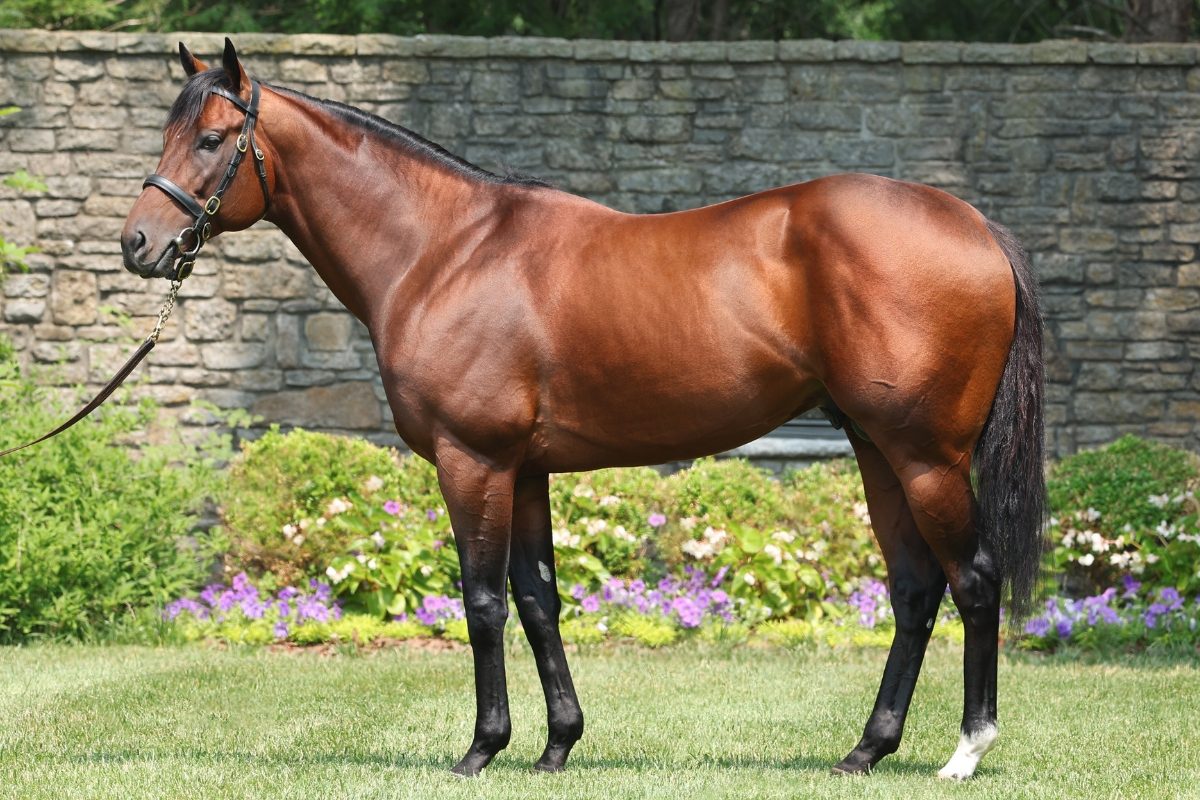
Cyberknife has 14 winners from 52 runners, a perfectly respectable number at first glance. He has one black-type horse and no black-type winner. His median fell from $65,000 to $26,500, down 59.2%, and his top yearling brought $100,000.
Jackie's Warrior ranks third on the BloodHorse first-crop list by progeny earnings. He has 51 runners and 11 winners, but only two black-type horses. His yearling median went from $170,000 to $80,000. Nashville offers another version of the same story: 13 winners from 47 runners, no black-type winner and one black-type horse. His median fell from $40,000 to $30,000.
All three had winners, and all three fell. The stronger commercial results tended to come from sires whose first crops were beginning to produce evidence of better horses.
Surface complicates that picture. Jack Christopher has three black-type horses from 48 runners, but all three earned that black type on turf. From 38 dirt runners, he has no dirt black type, and his median fell from $80,000 to $30,000.
Epicenter's only black-type winner to date also came on turf. His median fell 60%, from $75,000 to $30,000. He had the largest first crop in the group, 177 named foals, but only ten winners from 60 runners through September 29.
I would be careful about treating turf black type as inherently less valuable. Golden Pal was always a turf sprinter, and the market seems comfortable with his runners doing what he did. Jack Christopher and Epicenter came to stud with a different commercial expectation. In those cases, the question may be whether the progeny are matching what breeders thought they were buying.
Mo Donegal sits at the bottom of the group. His median fell 67.5%, from $20,000 to $6,500. He has 36 runners, seven winners and no black-type horse of any kind through September 29. His top yearling this year brought $50,000.
Flightline is still Flightline
Flightline is a good example of why a percentage change needs context. His median fell 15%, from $550,000 to $467,500, but he sold 52 yearlings compared with 44 last year. His gross increased slightly to $30.9 million, he had eight seven-figure yearlings in both sales, and his $2.6 million colt out of Park Avenue was the highest-priced yearling among the entire group this year.
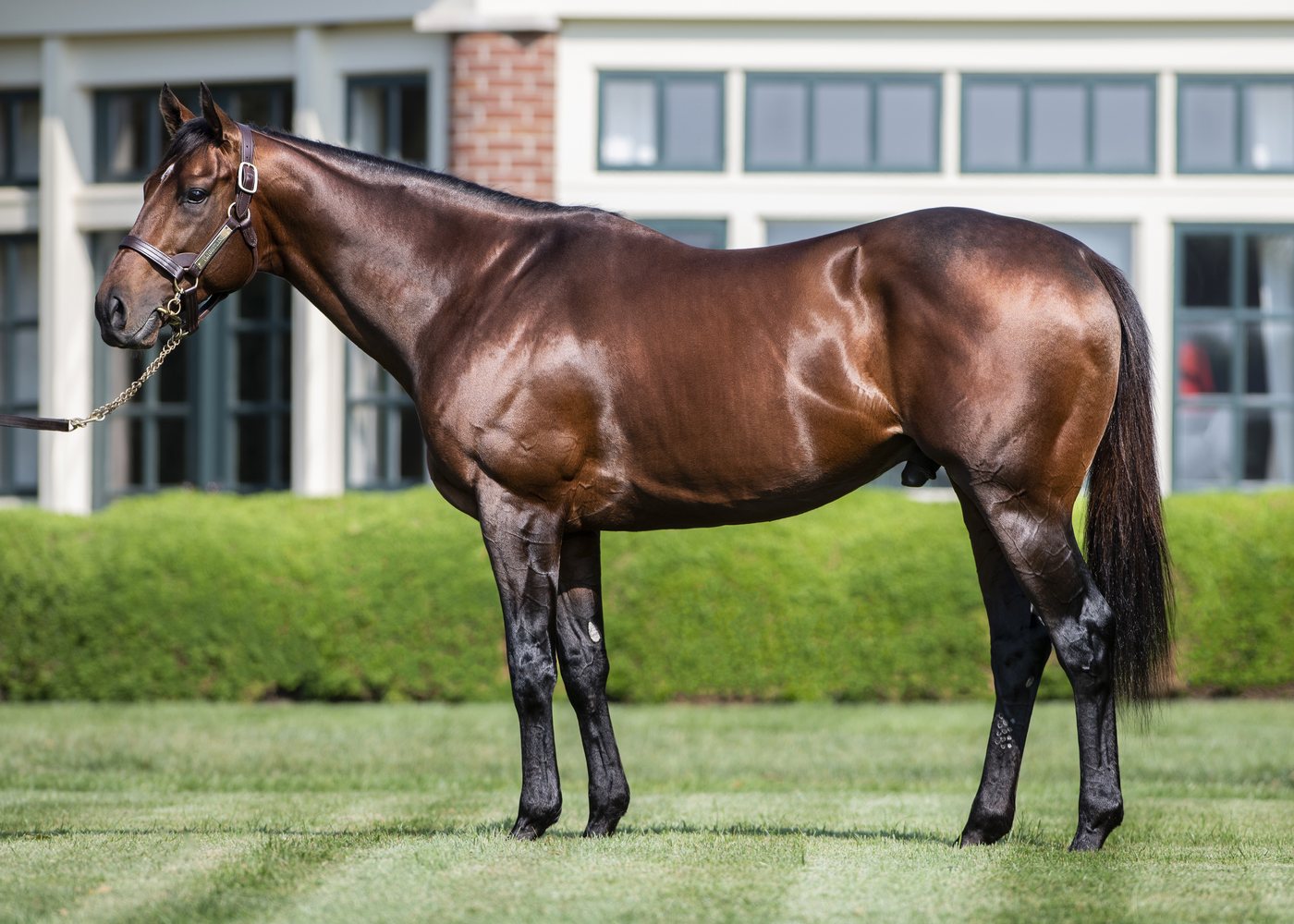
The market is still showing enormous confidence in him. The question is how much certainty buyers are willing to pay for while the first crop develops.
He has 33 runners and seven winners from 101 named foals. Both of his black-type horses have done their best work on turf, and his leading earner is in Japan. Twenty-one have started on dirt, with three winners and no dirt black type so far.
That is a long way from a final verdict, particularly for a horse whose own best racing came at distances his two-year-olds have barely had a chance to try. A move from a $550,000 median to $467,500 can be a decline and still represent a commercial position most stallions could only dream about.
The farms had already started moving
Every 2026 stud fee in this group was set in the fall of 2025, after the first yearlings had sold and months before any of these stallions had a runner. Those fee decisions lined up with what happened to the second yearlings a year later.
Mo Donegal was down to $5,000 and his median later fell 67.5%. Olympiad went from $35,000 to $20,000 and his median fell 54.4%. Jack Christopher went from $25,000 to $15,000 and fell 62.5%. Golden Pal was the lone fee increase, and his median rose.
The farms had already learned quite a bit from the first yearlings. The racetrack added information they could not have had when those fees were set. In particular, Grade 1 performance told us something new because none of it existed yet in the fall of 2025.
But the farms were hardly the first people making decisions on these horses. Breeders had been voting with their mares for several years by then.
Breeders had already been moving too
The mares-bred numbers add another layer because the timing is so different from the sale results.
These eighteen stallions covered 3,564 mares in their first season in 2023. That fell to 2,585 in 2024 and 2,169 in 2025. In other words, the class lost about 39% of its book between its first and third seasons.
Most of that happened very early. The first-to-second-book decline was 27.5%, and those second books were being assembled in the spring of 2024. The first foals were only arriving. Nobody had seen a yearling sell, much less a horse run.
By the third breeding season in spring 2025, breeders had at least seen the first foals go through the November weanling market. They still had no yearling results and no runners. That third book fell another 16.1%.
Some stallions held their books unusually well. Life Is Good went from 192 mares to 186 to 188. Flightline went 152, 152, 145. Jackie's Warrior was 183, 183, 166. Mystic Guide actually went 145, 154, 147. Those mares were already committed long before anyone knew he would have 25 runners and no black-type horse through September.
Others had already lost substantial breeder support. Mo Donegal went from 186 mares to 96 and then 46. Mandaloun went 211, 144, 73. Highly Motivated went 141, 64, 49. Those changes happened before their first runners could influence the decision.
I would treat Early Voting separately. His drop from 191 mares to 77 and then 64 overlaps with the fertility problem that interrupted his first season and eventually led to his move from Ashford to Taylor Made, so his numbers are not a clean measure of breeder demand.
When I compared the change in those third books with what happened to the stallions' 2026 yearling medians, there was some relationship, but it was considerably weaker than what showed up in the racetrack measures. That makes sense given the calendar. Breeders in spring 2025 had the first foals and the weanling market to work with. They did not have the first yearlings or a single runner.
The class was already separating before any of them had a runner. Breeders adjusted supply first, the farms adjusted fees after the first yearlings sold, and the racetrack added another round of evidence before the second crop reached Keeneland.
Mares bred are as reported to The Jockey Club: the 2023 and 2024 breeding seasons from its Live Foal Statistics and the 2025 season from its Report of Mares Bred, each as posted through September 28 to 29, 2026. Reports arrive late and the counts can still rise. Early Voting detail: Daily Racing Form, January 10, 2024 (Nicole Russo).
Keeneland had an opinion too
Book placement tells a similar story. These eighteen sires represented 21% of Book 1 in 2025. This year they represented 10%. Across Books 1 and 2 combined, their share fell from 28% to 11%.
Cyberknife went from 15 yearlings in the first two books to none. Olympiad went from 19 to none. Jack Christopher went from 23 to two. Epicenter went from 33 to 13. Flightline remained the obvious exception, with 51 yearlings in the first two books compared with 53 last year, while Life Is Good still had 38.
Catalogue placement is its own form of market judgment. Keeneland is making decisions months before the bidding starts, based on the individual horse, pedigree and where it believes buyers will respond. By September, some of the repricing was already visible before anyone raised a hand.
The prior classes look familiar
What gave me the most confidence in the finding was seeing similar patterns in the two previous stallion classes.
Vekoma led the 2024 freshman list, tied the North American freshman record with 39 winners, produced 14 black-type horses from 84 runners and saw his Keeneland median more than double, from $60,000 to $130,000. McKinzie produced two Grade 1-winning juveniles and went from a $100,000 median to $130,000. At the other end, Authentic, War of Will and Maximum Security each fell more than 65%.
A year later, Yaupon led the freshman class with a record eight black-type winners and had one of the smallest declines among the major sires, 10.7%. Maxfield, with ten black-type horses from 60 runners, fell 12.1%. Charlatan and Essential Quality fell 67.5% and 60%.
I used to think of the second crop mostly as the awkward commercial stage between novelty and an established sire. It is the first time the market gets to compare the horse breeders thought they bought with the horses he is actually producing.
There are still three months of juvenile racing left, so I would stop short of treating any of this as a final freshman-sire report card. A Breeders' Cup result or a late-developing two-year-old can change the picture quickly, and some of these sires will look different by January. All racetrack results here run through September 29.
About the study. The analysis uses Thoroughbred Intelligence's normalized Keeneland September record covering 22,092 yearlings from 2022 through 2026 and BloodHorse first-crop sire statistics current through September 29, 2026. The main 2026 comparison includes the 18 stallions with at least ten yearlings sold at Keeneland September in both 2025 and 2026.
The same screen was applied to the two preceding stallion classes. Across the three groups, 34 sires had both a published freshman-year record and enough Keeneland September sales to qualify. Black-type horses as a share of runners had the strongest and most consistent relationship with how a sire's second-crop yearlings held their value. The detailed methodology, underlying sire tables and source notes are available from Thoroughbred Intelligence.